Trivia: Like the PS1 Crash games, full completion shoes you as having a percentage above 100; in this case, it’s 101.
Crash and Spyro were two of the PS1’s most popular characters, and were effectively its unofficial mascots. A good chunk of quality games between them made sure most kids knew who they were, and all kids had a preference. Admittedly, mine was Spyro, but I still loved Crash’s games, and they’ve given me some of my fondest memories.
Strangely, the two franchises echo each other a lot. After departing from their original developers (Insomniac and Naughty Dog), they went multi-platform, a simultaneously disappointing and exciting fate shared by the Sonic the Hedgehog series. Whilst the console releases for the two following this weren’t the most positively received (Spyro’s was a glitchy mess, and Crash’s was a very enjoyable game that could be frustratingly slow at times), the handhelds seemed to be where they shined. Whilst I’ve not played the first Crash game on the GBA, I did play the second one a lot as I was growing up. In fact, my copy of N-Tranced was part of a double pack with Spyro: Season of Ice, and contrary to my previous stance on Crash vs Spyro, it was the Crash game I played more this time.
This is the double pack cartridge I was given as a kid; in my case, I lost the box years ago.
Something that becomes immediately obvious with this game is that it plays exactly like Crash’s 2D segments always have, albeit with slightly downgraded graphics. That’s not to say the game is ugly, because it’s not; it resembles the pre-rendered style of Donkey Kong Country, it’s such a nice style that is a change of pace from the many GBA games that focus on pixel art.
Crash is a classic platformer that sees you making your way to the ends of stages, preferably without dying. And like you’d expect from a kids’ game, that’s not actually that tough. Where the challenge has always come from in Crash is the additional challenges you can complete, like breaking every box in a level, or completing those nightmarish time trial segments. They’re a really tough time for kids to complete, but even when I couldn’t beat them growing up I’d never get frustrated with the game, I just accepted my lack of skill (which is pretty much still the case today when it comes to the Crash franchise).
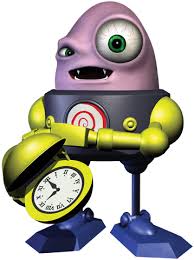
It was a bold move by Vicarious Visions (that’s right, the company that went on to make the N. Sane Trilogy) to omit Crash’s archenemy Dr Cortex. Instead, we’re introduced to the very creepy-looking N. Trance, who I always found to be a really unsettling character, and we also have Dr N. Tropy returning. As you’d expect by his name, hypnotism is his shtick, and he turns Crash’s family against him. Sure, the story’s not the most original, but I doubt anyone chooses to play a Crash game for the heartfelt narrative. The game’s just fun.
You can’t tell me that N-Trance isn’t a horrifying nightmare.
What surprises me is how well this game captures the feel of the PS1 Crash games, even if it’s limited by technology. In addition to levels in diverse locations, we’re also treated to the odd gimmick level, often based on some kind of vehicle. As was the case with the PS1 trilogy, these can be hit or miss, but they don’t really detract from the experience as a whole. It’s still an enjoyable adventure with Crash, and now that the bandicoot’s been back in action for a couple of years, it’s nice to go back and explore his past, remembering how many good memories the franchise has brought to everyone.
Trivia: Menu art was removed and replaced due to Fox wanting all 2D Simpsons art to go through their program.
I don’t know many people my age who didn’t played The Simpsons Hit & Run growing up. Not only was it released on every home console at the time, but considering how big The Simpsons is, it goes without saying that parents were familiar enough with the brand to know their kids would appreciate a Simpsons game (though there are some pretty bad ones out there…).
So how does it play? Interestingly, it can all be boiled down to one simple thing; kid-friendly GTA. Whilst the screen cuts to black rather than showing you throw civilians out of their cars, you do snatch vehicles from unlucky folks driving through town. The strange thing is, this somehow fits perfectly within the world of The Simpsons, and kid me didn’t even think of questioning it.
Even more surprising than the gameplay style is the polish behind it. The game is solid, with a myriad of cars and even costumes to choose from, many of which reference are nice Easter eggs for fans of the show. It’s a blast to play, and the driving is something that holds up, even if modern consoles’ driving controls are quite different to what they used to be. By far one of the most enjoyable aspects of the game to me (which may say more about me than anything else) is being able to kick people. It’s not funny just because you can kick them, but they fall over and flail wildly, almost like a fish out of water. Even now it’s really funny to watch. Kicking some things can even yield rewards, as lots of destructible items will give you coins that can be spent on the previously mentioned cars and costumes.
As you’d expect from a game based on The Simpsons (though less common than you’d think), the writing for the story is pretty good, drawing on the wackiness and humour we’ve all grown to love over the past 30 years. Familiar faces appear in the background of certain locations, though most simply repeat some of their more iconic lines from the show if a scene isn’t relevant to the story. It’s both a blessing and a curse, because the lines are funny, but I’d have loved to have seen some new stuff thrown in too. Granted, this is nitpicking to the extreme.
There’s a range of levels that draw on the different parts of Springfield we’ve seen over the years, from Evergreen Terrace’s suburbs to downtown with City Hall and the Police Station. Considering Springfield’s geography is inconsistent at the best of times, it’s unlikely that most of what we’re seeing (other than the Simpsons living next to the Flanders clan) is canon. However, the game has such a solidly built overworld that when I think of Springfield, the environments laid out in this game are what come to mind.
I do have a bone to pick with this game though, and that’s the last mission. By God that was a nightmare. I’m someone who’s hopelessly stubborn at the best of times, and I hate nothing more than falling at the last hurdle, but I had to give up because I was stuck on it for weeks, so I’ve technically not beaten the game yet. Even worse is the fact that my child self had to clear some space on the memory card, so he deleted the data for Hit & Run. Now to even try that ordeal again I’ll have to get through the whole game again.
This last mission induced to much stress in me as a kid, I hope I can tackle it if the game gets remastered. Also there’s doughnut-head Homer, another lovely costume.
Now onto the important stuff. Remastering old games is nothing new by this point, but what is new is remastering old licensed games. With THQ announcing they’ll be remaking the SpongeBob game Battle for Bikini Bottom, as well as including cut content, there’s hope that we can be seeing Hit & Run in HD soon enough. The icing on the cake is that THQ are the company that made Hit & Run too (as well as about a million other licensed games), so they could certainly be open to the idea of a remaster.
If a remaster were to happen, there’s only a couple of suggestions I’d have to improve on the game, and they’re tiny criticisms at best. First would be a radio option, if only so the overworld music becomes a little less grating over time. Even as a kid I remember it being too much at times, and I love a good radio in a game. Given how good most songs from The Simpsons are, I wouldn’t even mind if it was limited to songs from the show. Secondly, I’d do something about how the characters look in 3D, because the big bulging eyes is a little unsettling, and oddly that’s more the case now that I’m older. Thirdly, and this one is probably the most likely if a remake would ever happen, would be the inclusion of cut content, like the affluent 969 area of Springfield that a developer confirmed was axed in the seventh level (though present in earlier Evergreen Terrace visits) in order to ease pressure on the artists.
It’s rare that licensed games are so good, but SpongeBob and The Simpsons are massive franchises that have had some real gems in the licensed games department over the years. Now that one’s finally getting a second wind, it’d be nice if another game from around the same era and equally as loved could get the same treatment, even if we have to wait a few years.
TRIVIA: The Electrolls from Spyro 2 were voiced by Tom Kenny, who gave them the same voice SponeBob would later become famous with.
I’m sure everyone who’s ever played a game before has memories of that one game they played when they were really young, and that sense of awe and wonder was at its strongest. For me, that’s the PS1 Spyro trilogy (or rather, 2 and 3 because I never owned one until 2017). The second one is the first game I have memories of beating, and it’s amazing how the triumph I felt then came back when I replayed the series not too long before their fantastic remasters were released.
There’s something about the level design in Spyro that sets it apart from a lot of platformers, especially its main competitors at the time; Super Mario 64, Banjo-Kazooie, Sonic Adventure, and of course its main rival, Crash Bandicoot. Whereas these games often opted for linear level design or huge sprawling worlds with lots of collectibles, Spyro sits comfortably in between; there’s a linear path to the end that can usually be reached in only a couple of minutes, but there’s also lots to collect to the sides that gives completionists a lot to do.
Something else that sets Spyro games – particularly the first – apart from its competitors is the whimsical, dreamy landscapes the purple dragon explores on his adventures. Normally I wouldn’t notice stuff like this, but the pastel skies and architecture really give it an atmosphere unlike many other platformers. It says a lot when the games still have that whimsical impression two decades after their release. Whilst the visuals play a huge part in the atmosphere, something that should not be ignored is the music. The Police’s Stewart Copeland brings the levels to life with the rock-inspired themes we hear on our journey. There’s something inherently Spyro about all the tracks, a style so distinct that also perfectly captures the feeling of every level.
This man here is the real villain of Spyro 2, I’ll accept no other arguments.
Whilst I love praise this trilogy at any opportunity, it’s not without its flaws. Some of the sidequests and challenges are aggressively difficult, with certain ones in particular drawing a special kind of aggression from the fandom. Escort missions are barely ever people’s favourite part of games, but The Alchemist mission in Spyro 2 really takes the cake. What could have been a 10 second walk in a straight line becomes a minute-long gauntlet, complete with twists, turns and even fake outs to trip players up. Whilst it’s a lot less annoying going back to it, as a kid this was one challenge I just couldn’t do. Throw in the fact you had to do it twice if you never got the Head Bash before beating it, and that really throws salt in the wounds. The weird kind-of-tank battle in the third game is another low point as well in an otherwise fantastic game.
Spyro and most of the playable characters from the third game. Poor Sheila.
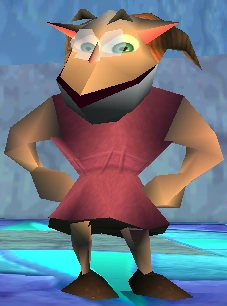
There’s a lot of charm in Spyro’s world, from being able to burn plants to the more tongue-in-cheek moments like being mooned by Gnorcs. It’s a wacky world full of crazy characters, and Insomniac just revel in the insanity. As dreadful as he is, I’ve always liked Moneybags because he gets some great dialogue options if you refuse to pay him (some of which were cut in Reignited because they were… risque, to say the least). Spyro 3 also introducted a bunch of new characters, and this time you could play as them. Sheila (who’s not included on the PAL cover for some reason) could jump really high, Sgt Byrd could fly with his jetpack and drop bombs, and Bentley could whack metal chests and reflect projectiles. More drastic changes came with Agent 9, who saw a number of shooter types of gameplay, from third-person to on rails to DOOM-esque, with Sparx having a top-down shooter style. Agent 9 is interesting because his third-persons segments almost feel like an early attempt at Ratchet & Clank, Insomniac’s next big franchise. Admittedly, Agent 9’s gameplay isn’t half as good as that, and the other alternate characters all have their own problems, but they’re a nice change of pace usually. Except yeti boxing, that’s fun for nobody.
Whilst a lot of games from the PS1 era tend to age like a pint of milk that’s been left in the sun for a week, I think Spyro manages to avoid this trend, being a game that can still be enjoyed very much today. Insomniac Games truly did a brilliant job of making something vibrant, unique and a true joy to play, even in spite of some infuriating moments. This trilogy will always have a special place in my heart, not only for including the first game I ever beat, but for its undeniable charm and quirkiness that many games can’t come close to. I’d go as far as to argue that it’s a must-play for anyone who’s not given it a go yet, and that refers to either the original or Reignited, which is due to come out on the Switch in early September.
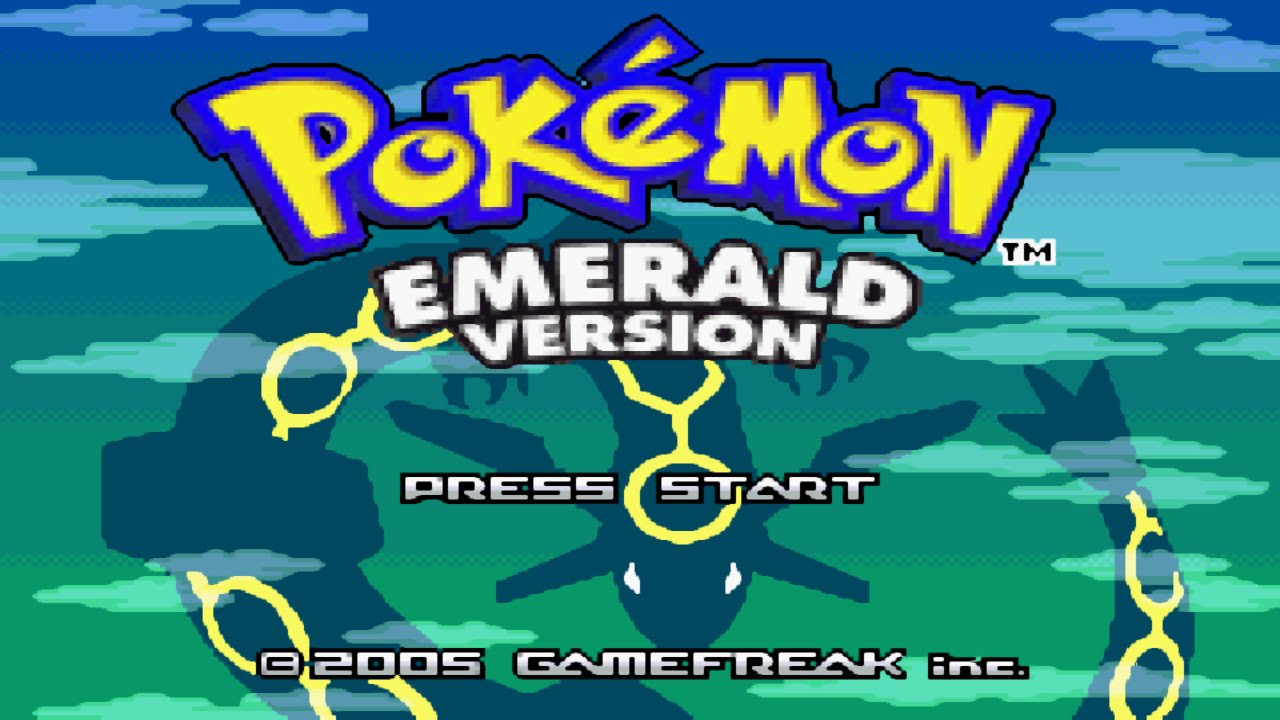
TRIVIA: Pokémon Emerald had a green-coloured cartridge, and it was the last Pokémon game to have a special-coloured cartridge. A shame, really.
Pokémon Emerald is a game I have nothing but fond memories of. I remember the Christmas where I first got my Game Boy Advance, and with it this game. How I found out about the Pokémon franchise was the weirdest phenomenon; when I was a baby, I saw someone wearing a big Pikachu hat at a party, and I took it (there’s pictures, thankfully not on the internet). For the next couple of years I got the odd bit of Pokémon merchandise, until finally I saw an advert for Advanced Battle. Crabs shooting bubbles, that cute yellow mouse using a huge electrical attack? What kid wouldn’t find that cartoon world to be the coolest thing ever? And after watching the show religiously, I finally worked my way around to getting the games, and Emerald was my first.
There’s a lot that’s been said about Pokémon Emerald before, which makes sense considering the game is nearly 15 years old. But going back to these older games and experiencing them with new eyes is always a world of fun. Pokémon especially is renowned for its replayability, so it’s always easy to start a new game and give it another go. As soon as I started the game again, I remembered how charming it is. The sprites, the music, the general tone of the game, it’s all bright, happy and vibrant in a way that feels homely and friendly, as if it’s glad you’ve came back to it. That’s a sentiment I echo, because the gameplay, as expected with Pokémon games, is tight. Even though it’s a bit less refined considering it’s the third generation of a franchise that’s moving onto its eighth generation this year, the formula was already solidified and it’s a smooth experience. Sure, the Fairy type and a few other mechanics aren’t present, but the core formula is as solid as ever.
Tentacool, the truly terrible scourge of every body of water in the Hoenn Region.
One thing I always like when I go back to the Hoenn games is the variety in the landscapes. There’s your standard forests, cities and caves, but there’s also a route littered with volcanic ash, a city in the trees and a city floating on water. Hoenn’s such a diverse landscape, especially compared to what came before it, and it still stands out as a solid region to explore to this day. However, there is a contentious element; water. Given that the two villainous teams are fighting over flooding the world or causing a massive drought (which are both ridiculous ideas, but it’s so over the top you can’t help but love it), it makes sense that water plays a prominent role in Hoenn. Most complaints come from the lack of diversity in wild Pokémon at this point, a complaint which I think is fair; Tentacool and Wingull are pretty much all you’ll be seeing until you get Dive, when Chinchou and Relicanth might make rare appearances. It’s a bit annoying, but it’s for probably less than a tenth of the actual game. An annoying tenth, sure, but there’s nine tenths that are still great in terms of wild Pokémon diversity.
There’s a few features that were present in Emerald that have since left the franchise, or are only seen in remakes and the occasional new instalment. Some of these were amazing features and it’s honestly devastating that they’re not in the newer games. Secret Bases are a big example of this, letting players basically create their own treehouses with all kinds of posters and other decorations to make them stand out. As a kid I used to channel my inner interior designer for hours with this feature, and it was never a chore. Unless I had to buy new items, that was as fun as spending money is in real life. By far though, one feature stood taller than the rest; the Battle Frontier. Imagine a theme park where all the attractions are incredibly tough Pokémon battles with different gimmicks, and you’ve got yourself one of the most replayable challenges in the franchise’s history. It’s such a shame that it returned in Platinum and the Gold/Silver remakes, but never after that. I’d love it if we could see it return for Sword and Shield or whatever games come after them.
Overall, I’ve got a lot of love for Pokémon Emerald; it was the final push I needed to become the huge Pokémon fan I am today, and I really do have lots of fond memories of it. Special attention has to be called to the time I caught a Zigzagoon, and me and my brother decided we were really cool because we nicknamed it SEX (yep, even in capitals, I didn’t know how to switch the keyboard to lower case). You’d better believe that as six-year-olds who didn’t want to be banned from gaming forever, that Zigzagoon was shoved into a PC box and never used again. Currently, it’s sitting in my copy of Moon. So even though there’s been games that have improved the formula in significant ways, Emerald still holds up really well, and I’m sure even people without those nostalgic memories would agree. It’s a joy to play, with its vibrant landscapes and fantastic soundtrack making any journey through the Hoenn Region a brilliant one.
There is a tragic tale I have regarding Pokémon Emerald, unfortunately. Considering I played it so much as a kid, the battery that stores the save eventually ran out one day when I went back to it for my nostalgia fix. Most of the main Pokémon I used had been moved up to my copy of Moon by that point, like SEX the Zigzagoon, but there is one Pokémon who never made it; my first Pokémon WACKFIRE the Blaziken (silly name, I know). For years I’d kept it in its original game because I didn’t want to pull it out of Emerald in case I ever returned and didn’t have any of my old Pokémon left to greet me. Still, I was lucky in that I managed to copy a lot of its data into a Pokémon save editor for the DS games, but it’s not the same. The original WACKFIRE has been lost to the sands of time. Yet despite this, Emerald is still a game I’d highly recommend; just make sure the save battery works before you play it.
TRIVIA: Sly Raccoon, a game on the PS2 demo disc, is called Sly Cooper elsewhere; apparently Cooper is slang for an attractive person here (it’s not), so it was censored
Demo discs are something that aren’t too common in gaming these days. Honestly, I think that’s a massive shame, because they often help you play games you might not otherwise get the chance to try. Of course, it’s a business strategy to entice kids to beg their parents for as many games as possible. But here’s the surprise; it works. Sometimes.
Unsurprisingly, I had a couple of demo discs of my own back in the day; one for the PS1, and one for the PS2. After some research, I found that the PS1 disc is from 1997 (so it’s 2 years older than me) and it’s called Demo One. The PS2 one is the 2002 PBPX-95514 disc. I spent a fair bit of time with both of these as a kid, and for different reasons. There’s one particular thing about the Demo One disc I remember clear as day. There were a couple of tech demos that let you interact with models of a T-Rex and a Manta Ray. Me and my brother were only around 3 at the time, but every time we’d play the T-Rex demo – often by accident as we randomly jumped through the menu – we’d be terrified. We used to run and hide from it because it scared us that much. I wish I could say it was less terrifying when I went to look back at it, but it’s not. That thing scares me.
This right here is the stuff of nightmares.
There were of course, games on that disc too. It was an interesting mix as well. I’ll admit I didn’t play all of them, but I gave a few of them a good go, and I used to watch the previews that came included quite often. First up is Abe’s Oddysee, which – much like the T-Rex used to scare me a lot when I was a little kid. I was bad at it and died a lot, and the grim aesthetic was something kid me could have went without seeing. Truly though, I think when I was young I was unfairly dismissive of the game. I only really realised that when I came back to it years later, and it’s interesting how the things that used to scare me – the difficulty and aesthetic – help it stand out now. It’s got some really interesting challenges that make you think, though I’d be lying if I said it was an easy time. It’s still really not.
Another game I used to play a lot from Demo One was Disney’s Hercules. I’m a bit of a heathen in that I’ve not watched many of the ’90s Disney films at all, and it’s something I’ve really been meaning to do recently. Either way, I still think they look great animation wise, and the game manages to capture that style perfectly, in the way that a lot of ’90s Disney Games managed to do for their respective films. In terms of gameplay, I can’t say a lot about it, because I always used to get stuck in the same place. That’s something that I’d probably not have to worry about now, but when I replayed the disc a couple of years ago I still got stuck. Looking at gameplay, one thing that I really like about it is that, despite being a 2D platformer, there’s certain pseudo-3D elements like being able to walk up stairs to access upper layers. Platformers have done a lot with this mechanic since, but I think (don’t quote me on this) that it might be one of the first instances of this in the genre.
The last game that I remember playing was one called Kurushi, which is apparently called Intelligent Qube elsewhere. This was the third thing about Demo One that used to scare me. The black void of the levels, the lack of music and the horrifying sound effects made this an experience that kid me found… unnerving, to say the least. Going back to it doesn’t shake those feelings, but I can at least appreciate the puzzles now I’m able to understand what’s going on properly. It’s actually quite a fun game, at least in the demo, though the atmosphere could definitely use lightening up.
Onto the PS2 demo disc now, and although I have more memories of it, they’re pretty much isolated to two games. The one I have by far the most experience with is Ratchet and Clank. It came with two full levels, arguably the most iconic ones from the full game, and you got to play them in full. For a demo, it was a pretty amazing experience, so much so my mum bought be Ratchet and Clank 3 that Christmas. It wasn’t until a couple of years later I was able to get the full first game, but I was mesmerised by the franchise as a kid, and they’re still some of my favourite games over a decade later. The gameplay was just really fun so I had to have more of it, and I’ve played most of the mains series games since (including buying 2 to bridge the gap between 1 and 3). It’s a great series that I probably wouldn’t have known if I hadn’t played the demo.
I’ve seen this cutscene so many times I could quote it all. Sad, I know.
The second game is one I’ve got a bit less experience with, because it’s the one my brother always gravitated towards. It was Formula One 2002, and whenever I wasn’t on Ratchet and Clank he’d be on that. I played it once and was woefully bad at it, but my brother was worse and I’ll stand by that. We didn’t really play with many of the other games or watch the videos. It’s a shame because I ended up loving the Sly Trilogy when I bought the collection on PS3 despite having not played the demo, and I’ve always really wanted to try Ape Escape, and if I’d have watched the video for it I might have begged my parents to buy it for me at the time. Still, lots of fun memories were had with this demo disc, I might have even gotten more mileage out of just Ratchet and Clank than all of the previous games combined.
One thing about both of these discs that definitely serves a shout out is the menu design. In terms of UI, they’ve both aged, with Demo One being pretty terrible to look at now, and the PS2 disc has that early ’00s look all over it. Where they both shine, however, is their soundtracks. Demo One’s is upbeat and synth-heavy, so it gets you pumped up to see what the games have in store. The PS2 disc has a more mellow soundtrack, one I found a little bit creepy (like most things in these discs, apparently; I was – and still am – easily spooked), but it sounds pretty good.
All in all, demo discs are a forgotten format that I’d love to see return. The PS2 demo disc worked on me because it encouraged me to pick up a game in this new franchise I’d not heard of until then. That’s why I’d argue demo discs work better than individual demos; you’re more keen to try something new if it comes bundled with 20 other things. For free. In my experience people only really download single demos to play the game earlier, because they already know they’re buying it. In fact, sometimes I’ve seen people put off by demos that way. Of course that’s highly subjective and anecdotal, I’d just love to see demo discs make a return. Maybe with less creepy games/features, though.
TRIVIA: In 2008, Sonic Heroes had the Guinness World Record for the most playable characters in a platformer.
It’s hard to believe that Sonic Heroes is 15 years old this year, not just because that’s a shockingly long amount of time, but because it was one of the first games I ever completed. Sure, I did it as Team Rose (easy mode is an understatement), but I did it when I was like four. And that makes me feel old.
Like most core Sonic games, Sonic Heroes is a platformer with colourful environments and fast action. It was one of the first Sonic games to put a bit more emphasis on combat, as the robots you fight now come with HP bars, so they don’t all die in one hit; most don’t, in fact. Where it truly differs from the other core Sonic games is with its central gimmick, the team-based gameplay. You control three characters at a time, one for Speed, one for Flight, and one for Power. There’s four teams as well, with a wide range of cartoon animals to pick from. Though most of them play alike, there’s still twelve characters you could be playing as, which is actually a clever way of utilising the wide cast of Sonic characters. And that’s a big strength of the game, because the characters are all great, except Tails’ obnoxious interruptions. If I have to hear “Look at all those Eggman’s robots” or “Wow, my head’s spinning” one more time in my life…
At its core, the gameplay is solid. Speeding around feels fun, flying is great (if a little short), and it’s never not fun to punch a robot until it explodes. It’s a fun time, and impossible for me, as a nineteen-year-old, to feel anything but joy playing this game most of the time. The aesthetic is great, with the only oddity being that all the playable character models are weirdly shiny, like plastic toys you can pull out of the TV, but one area where the game shines – as most Sonic games do – is the soundtrack. It’s that perfect blend of cheesy rock, synth, and whatever Hang Castle’s theme is. Either way, all the tracks in the game are ones that can get stuck in your head, even years after playing the games. Then as soon as you turn it back on, those songs come flooding back. Even the vocal ones, they’re bloody great too.
It would be unfair to say the game is without its flaws, however. Sometimes, particularly when playing as Speed characters, it can feel like you’re slipping on a constant trail of bananas, bouncing around until you inevitably fall off a cliff, walk into an enemy’s attack, or some other third thing. Special Stages are possibly where the slippery feet are at their worst, as if Sonic and friends have dipped their shoes in oil before starting their race for the Chaos Emeralds. Special Stages in this game are not fun. At all. On paper, they should be great; running around a tube collecting orbs sounds like a simple, easy time. In reality, that’s not the case. The boosts you get from the orbs generally work better if you spam the boost button instead of holding it, and if you’re unlucky enough to run into the spike ball things, God help you, because you slow to a crawl. And then the Emerald flies on by, so you don’t stand a chance. They can still be done, and Sonic Generations for the 3DS brought this type of Special Stage back, where they were infinitely better. Heroes just has some problems with its controls sometimes. The worst, by far worst example comes from the alligator in Lost Jungle. I hate that alligator. You have to jump when your vine swings upwards, but sometimes you just go off in some wild direction, and I can never figure out when it’ll happen, because it seems purely random to me. I got stuck there as Team Sonic and Team Dark when I was a kid, and that’s definitely the main reason why I ended up finishing the game as Team Rose.
One more problem with Heroes, which to be honest doesn’t bother me that much, is the level differences between the teams. They’re not actually that different. Team Rose often just gets a shorter section than the others, Team Sonic’s are the middle ground, and Team Dark’s are longer. Team Chaotix – my favourite team – often just get some kind of bonus objective that range from a nice change of pace to pure frustration. Turning off all the torches was another nightmare when I was a kid, I always missed one and then missed it again when I went back to the beginning. These missions are less of a problem now that I’m older and specifically looking for the objective, though. As a kid I probably just ran around and liked the bright colours, I wasn’t difficult to please.
It’s obvious that Sonic Heroes isn’t the perfect game, but it’s one I always find myself coming back to. Heck, I bought the GameCube version because I grew up with the PS2 one, which had exclusive problems that weigh it down (audio cutting out is a big one, like Knuckles saying “Alrigh-” when you pick Team Sonic). In the grand scheme they’re really just nitpicks that I’m too dense to notice half the time, which is the case with a lot of problems with this game. They’re easy to overlook if you focus on how charming, cheesy and fun it is, and believe me it’s all three of those things.








 Nostalgems