New Pokémon Snap: Worth the Wait

Here's The New Pokémon Snap Box Art | Cultured Vultures
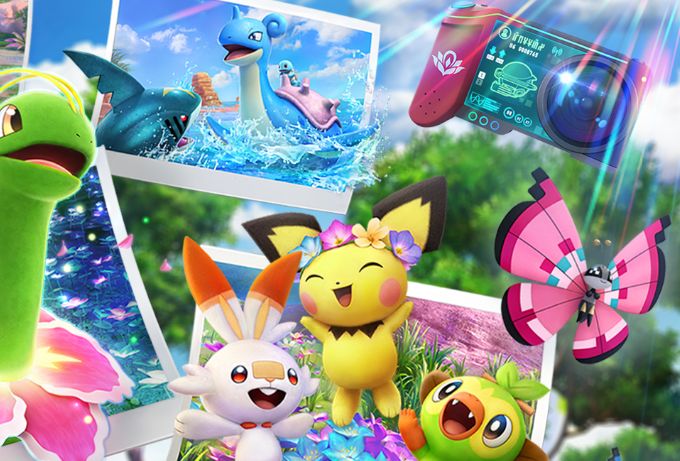
FUN FACT: Although Grookey and Scorbunny both appear on the game’s front cover artwork, their fellow Galarian starter, Sobble, is relegated to the back cover. Poor Sobble.

Sequels that come many years after the original can vary wildly in quality, and this was something in the back of my mind when New Pokémon Snap was announced to be getting released at the end of April. Having played the game and exhausted the opportunities, I can safely say that any concerns I had were put to rest.

Thankfully, this sequel didn’t feel the need to reinvent the wheel; you’re still a young photographer tasked by a professor to go and take pictures of wild Pokémon in your machine that sticks to set paths. Along the way, you unlock items that you can throw to/at Pokémon to see how they react. At its core, this game is as faithful to the original as it could possibly be, and that works in its favour.

It would be a crime to talk about this game without mentioning how gorgeous it is. In just about every aspect, New Pokémon Snap blows Sword and Shield’s mediocre graphics out of the water. Textures are crisp, the locations are stunning and the Pokémon are so lively. There’s so many random interactions I’d never expect to see, like Scorbunny sleeping on Torterra or Torchic and Hippowdon befriending each other at a desert oasis. Every Pokémon oozes personality in this game, which makes taking pictures of them even more fun.

Where this game differs from its predecessor is the introduction of a slightly more involved story. Sure, the core is the same, but you make new friends and attempt to discover the mystery of the Illumina Pokémon as you travel around the Lental Region. The cutscenes that come with this story are stunning, and frankly the best a Pokémon game has ever looked.

New Pokémon Snap length explained: How long is New Pokémon Snap? •  Eurogamer.net

What I really like about New Pokémon Snap is that there’s so many secrets to be found, just like the original game. I was worried it’d be more handholdy, but it’s really not; there’s a scan function that helps draw your attention to a couple of things, but there are so many hidden paths and features that the scan only really provides slight hints for. You’ve got to figure things out on your own, and I love this. Pokémon games really should put more trust in their players because this game shows how well it can pay off.

An addition to the Snap formula that I really liked is that quests have been brought into the fold. Getting specific poses of Pokémon can yield rewards that allow you to add borders and effects to your pictures, so they’re not even remotely compulsory to completion. They also give you some slight hints on how to get the best pictures, which is cool.

One of my biggest complaints with the game comes from the points system. Unlike in the original game, in which Professor Oak simply gave you a score and you could strive to get the highest score, the sequel introduces not just a four-star system, but also bronze, silver, gold and platinum colours to accompany these. You don’t need the platinum colours to complete your PhotoDex, but you do need a photo for each star ranking. The catch? You can only have one photo for each species of Pokémon analysed per trip. This means you need to play through a minimum of four times to complete the PhotoDex, which in its more frustrating moments can feel like padding.

New Pokémon Snap Photodex / Pokédex - Pokémon Listing For All Monsters |  Real Raw News today

Although platinum stars aren’t necessary, in order to progress to new levels (or unlock alternate variants to the existing ones), you need to collect XP. In order to collect XP, you need to get the highest score on each photo as you possible can. It’s a nice incentive to get the best pictures, but the caps for some of the higher levels can be pretty tricky. Combine this with the one photo per species rule and it can sometimes become a bit frustrating.

My only other frustration comes from the Illumina Pokémon themselves. They effectively function as boss battles, which is a super cool idea, but as someone who likes to take photos of as many Pokémon as possible, the initial time you encounter their stage they are the only Pokémon in it. Which often means waiting a couple of minutes for them to appear so you can get a decent picture of them. It’s a small concern that only arises in a few stages, but definitely caused little bouts of boredom here and there.

All in all, as far as sequels go, New Pokémon Snap knocks it out of the park; it’s a bigger, better version of Pokémon Snap that adds a lot of replay value and of course looks much, much better than its 22-year-old, N64 predecessor. If there’s one thing I hope comes out of this, it’s that we start to see more creative spin-offs again, or at the very least returns to dormant spin-off series like Pokémon Ranger (which could also work very well for the Switch).

Pokémon Snap: A Picture-perfect Spin-off

Nintendo 64 Longplay: Pokémon Snap - YouTube
FUN FACT: Pokémon Snap wasn’t originally planned to be a Pokémon game, but something called Jack and the Beanstalk, much like the fairy tale.

Early Pokémon spin-offs were strange, they built on the concept of capturing every Pokémon in unique ways. Snap is one of the most fondly remembered spin-offs, and sees you capturing Pokémon not in Poké Balls, but with a camera. New Pokémon Snap has just been announced, so I figured it’d be nice to talk about the game that’s waited 21 years for a sequel.

In terms of gameplay, Snap is incredibly simple. It’s basically an on-rails shooter, only you use a camera instead of a gun in one of Nintendo’s signature spins on an established genre. You’re trying to get the best pictures of the wild Pokémon as possible, in order to do Professor Oak’s work for him (no changes there then). What’s most surprising about this simple gameplay is just how good it feels.

The main USP of Snap at the time it was released was seeing Pokémon in their natural environments, something that still has appeal to this day (hence the sequel). In addition to just watching them you can throw apples or Pester Balls at them to change how they’d react, or to prompt specific events, even evolutions in some cases. However, this did mean that cuts had to take place, as animating 151 Pokémon would have been incredibly time consuming. Consequently, this number was slashed to 63. Others like Ekans were planned in the beta, but unfortunately never made the cut.

The available Pokémon are divided into 6 areas, with a hidden seventh one housing Mew. With only a few Pokémon in each, the game isn’t that long, but honestly that doesn’t diminish any enjoyment at all. To this day it’s an incredibly fun time, seeing all the Pokémon going about their lives as you take pictures of them. There’s something oddly peaceful about it, except for when you’re trying to get a rare Pokémon to appear, or evolving one. Then it’s a bit more stressful.

Even though it was a Nintendo 64 game, I have to say that I really like how the game looks. Sure, it hasn’t aged the best, but it looks nice for what it is and the animations are so charming that you don’t find yourself focused on the individual polygons and textures. The game just oozes charm and charisma. You also have to give it props for bringing the 8-bit sprites from the Game Boy games to life in such an artful way.

I feel that this game was perfect for some kind of multiplayer action, like pitting two players against each other to see who could take pictures of more unique species. Heck, there’s even a points system in place, that could be easily translated to a multiplayer system. That could really add to the replayability, so it’d be nice to see them add something similar to the new entry, as unlikely as it may be. Even without this though, the game is still very replayable as is, I’ve gone back to it a few times myself.

In a way, Pokémon Snap feels like going on a safari drive in the Pokémon world, and it really succeeds at that. This game brings about a certain type of magic that a lot of other Pokémon spin-offs can’t quite reach, and I feel like that’s why it’s remained such a popular game over two decades after its release. Hopefully, New Pokémon Snap can do the original justice, and based on the release trailer that came out last week, I’m optimistic.

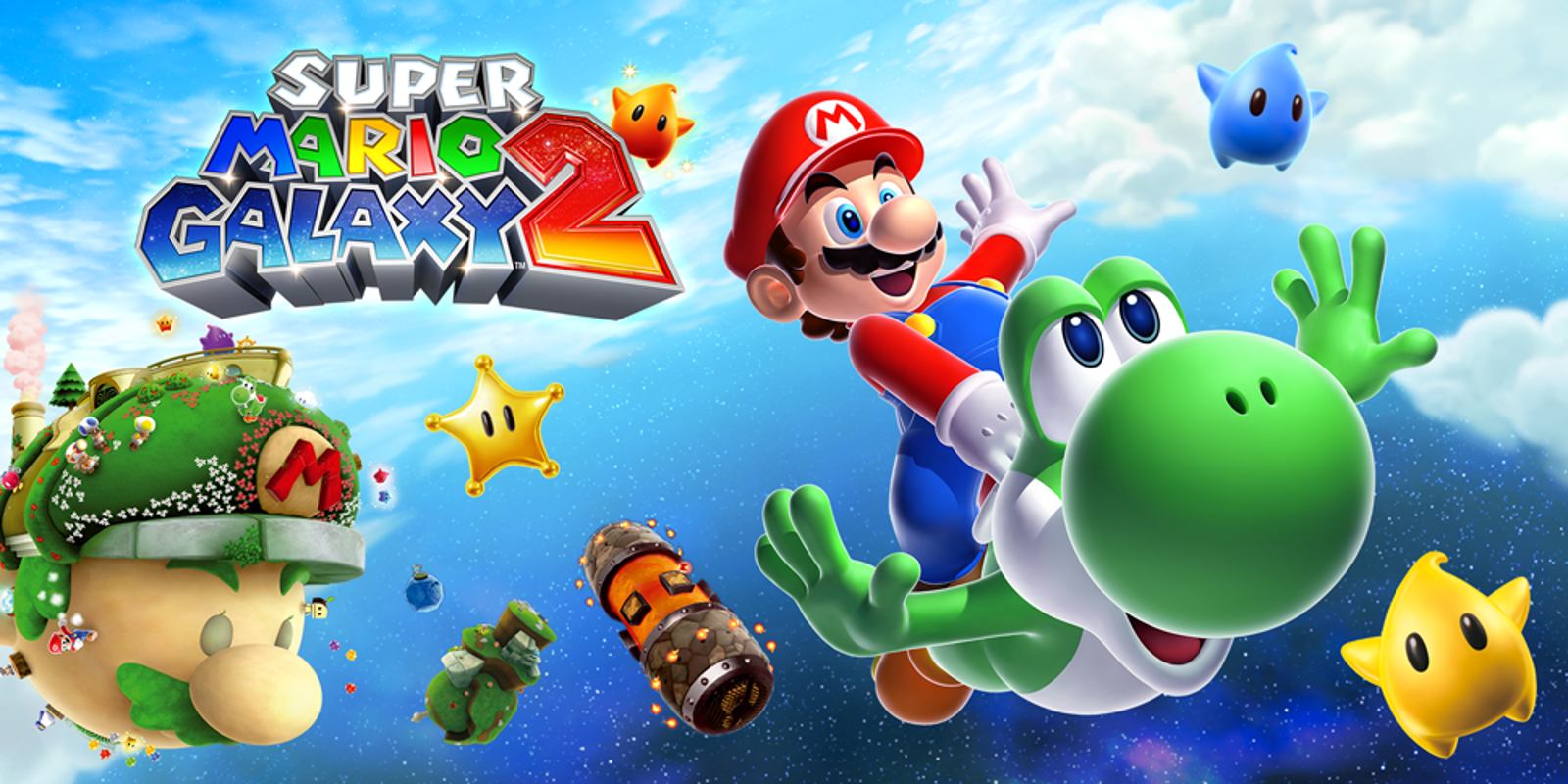
Super Mario Galaxy 2: The Best Expansion Pass

Image result for super mario galaxy 2
FUN FACT: In early stages of development, the game was initially called Super Mario Galaxy 1.5 and was more clearly an expansion of the first game.

DLC isn’t unusual in today’s gaming industry. In fact, most companies have their games shipped off with the intention of adding more content at a later date, sometimes free but usually paid. How did this work for the Wii, a console that didn’t download updates for software? Make a new game of course. And that’s just what happened with Super Mario Galaxy 2, one of my favourite main series Mario games.

Gameplay-wise, most of the basics are taken directly from its predecessor. You’re in space and running around little planetoids. Mario moves the same as he did in the previous game, with the long jump, triple jump and spin jump as you’d expect from a Galaxy sequel. However, there’s lots of new content too. Yoshi makes his return, this time with access to some power-ups of his own. Mario also has some new tools, including the Rock Mushroom and Cloud Flower, both of which are great additions, even if controlling Rock Mario can be a nightmare sometimes. Unlike the first game, you eventually unlock the ability to tag out and play as Luigi whenever you’d like, so obviously we switched to the superior brother as soon as it was possible.

I just recently 100% completed this game for the first time, though I’d attempted to (and failed) years earlier. Having a second player was a godsend, because the P2 Luma can freeze enemies, defeat some of them and collect certain items like Coins and 1-Up Mushrooms for you. We also alternated every now and then, so sometimes I’d be P2 and try my best to stop all the hazards for P1. This definitely makes the game easier, but you can also screw up and hurt the plumbers inadvertently. Or intentionally, if you’re evil. My favourite feature of the P2 Luma is its ability to tickle NPCs though. There’s so many great animations you can find that give the characters more life.

Image result for super mario galaxy 2 tickle lubba
The amount of times we tickled Lubba throughout the playthrough was insane. His animation is adorable and warmed our hearts whenever a level had stressed us out. Get him in Mario Kart.

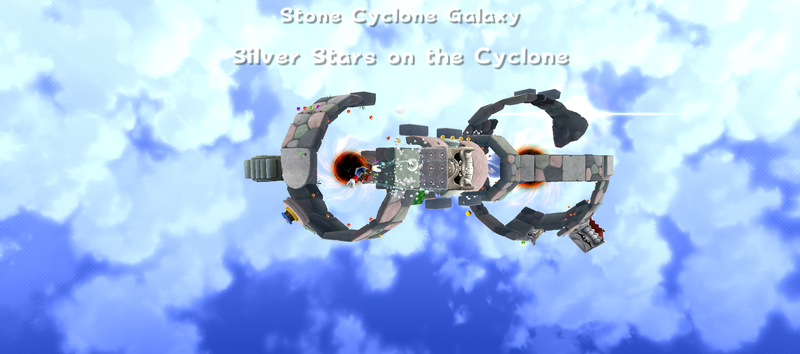
What’s surprising about this game though is just how difficult it can be when it wants to. Some of the later worlds have really tough challenges that test your skill with some gauntlets so challenging you wouldn’t expect them from a Mario game. Bowser Jr in particular has some tough levels at the ends of worlds, though the odd level can also have a secret Star that really puts you to the test. Combine that with Prankster Comets and there’s a perfect storm of challenge and fun. And then there’s Green Stars. I both love and hate the Green Stars. There is one level that had me ready to rip my hair out when collecting one of its Green Stars; shout-out to Stone Cyclone Galaxy’s first Green Star, by God was that a nightmare.

As you’d expect though, Galaxy 2 is a fantastic game, which is again just what the Mario franchise delivers time after time. It’s got its moments that infuriate you, like Stone Cyclone Galaxy and those nightmarish “break all the boxes” challenges (though P2 Luma helps with them as well), but it also has some of the most fun levels in a Mario game. Cloud Mario’s levels in particular are a favourite of mine, and I’m also a big fan of Bee Mario’s stages. Some of the Yoshi ones are great as well. All three have their fair share of annoying Green Stars though. Still, even when you’re angry about getting a Green Star, it’s fun. You know you can get it if you jump a little higher, and you’ve really got to think carefully in some cases (looking at you, Puzzle Plank Galaxy’s first Green Star). Grandmaster Galaxy is on another level of challenging when you have to complete a Daredevil (1-hit only) run, and my friend did that for us whilst I went out for a walk. Do I want to try it to redeem myself? Not on your life.

There’s also a lot of callbacks to older Mario games, which is sometihng this franchise does in a way that’s not too obnoxious compared to say Sonic’s love of Green Hill Zone or Pokémon’s obsession with Kanto and Charizard. Lots of different games get callbacks, there’s a balance. Of course the first game gets more obvious ones with its music returning (basically a staple of any Mario game at this point), though some tracks also come from Super Mario World. Supermassive Galaxy is adorned with the Brick Blocks, ? Blocks and Pipes we all associate with Mario now, and could be seen as a reference to Giant Land from Super Mario 3. Throwback Galaxy is literally just Thwomp’s Fortress from 64, and bosses from the first game (including the dastardly Bouldergeist) return for Boss Blitz Galaxy in World S. Stone Cyclone Galaxy is also taken from the previous game, but sped up four times out of spite. There’s probably countless more I’ve missed out, but these are the ones that called out to me.

File:SMG2 Stone Cyclone.png
Mario doesn’t know what he’s gotten himself into. Pain, pure pain. That’s what.

Galaxy 1 was a fantastic game, and all things considered I think 2 is a worthy, maybe even better sequel. Whilst I miss the Comet Observatory and Rosalina, Lubba’s great and there is so much to do. 242 Stars is nothing to scoff at. I’d not played it in around 10 years until this month, but we were so enthralled we were able to complete it in a week, and when a game keeps you that hooked you know it’s a brilliant one.

Pokémon Emerald: A Real Gem

TRIVIA: Pokémon Emerald had a green-coloured cartridge, and it was the last Pokémon game to have a special-coloured cartridge. A shame, really.

Pokémon Emerald is a game I have nothing but fond memories of. I remember the Christmas where I first got my Game Boy Advance, and with it this game. How I found out about the Pokémon franchise was the weirdest phenomenon; when I was a baby, I saw someone wearing a big Pikachu hat at a party, and I took it (there’s pictures, thankfully not on the internet). For the next couple of years I got the odd bit of Pokémon merchandise, until finally I saw an advert for Advanced Battle. Crabs shooting bubbles, that cute yellow mouse using a huge electrical attack? What kid wouldn’t find that cartoon world to be the coolest thing ever? And after watching the show religiously, I finally worked my way around to getting the games, and Emerald was my first.

There’s a lot that’s been said about Pokémon Emerald before, which makes sense considering the game is nearly 15 years old. But going back to these older games and experiencing them with new eyes is always a world of fun. Pokémon especially is renowned for its replayability, so it’s always easy to start a new game and give it another go. As soon as I started the game again, I remembered how charming it is. The sprites, the music, the general tone of the game, it’s all bright, happy and vibrant in a way that feels homely and friendly, as if it’s glad you’ve came back to it. That’s a sentiment I echo, because the gameplay, as expected with Pokémon games, is tight. Even though it’s a bit less refined considering it’s the third generation of a franchise that’s moving onto its eighth generation this year, the formula was already solidified and it’s a smooth experience. Sure, the Fairy type and a few other mechanics aren’t present, but the core formula is as solid as ever.

Tentacool, the truly terrible scourge of every body of water in the Hoenn Region.

One thing I always like when I go back to the Hoenn games is the variety in the landscapes. There’s your standard forests, cities and caves, but there’s also a route littered with volcanic ash, a city in the trees and a city floating on water. Hoenn’s such a diverse landscape, especially compared to what came before it, and it still stands out as a solid region to explore to this day. However, there is a contentious element; water. Given that the two villainous teams are fighting over flooding the world or causing a massive drought (which are both ridiculous ideas, but it’s so over the top you can’t help but love it), it makes sense that water plays a prominent role in Hoenn. Most complaints come from the lack of diversity in wild Pokémon at this point, a complaint which I think is fair; Tentacool and Wingull are pretty much all you’ll be seeing until you get Dive, when Chinchou and Relicanth might make rare appearances. It’s a bit annoying, but it’s for probably less than a tenth of the actual game. An annoying tenth, sure, but there’s nine tenths that are still great in terms of wild Pokémon diversity.

There’s a few features that were present in Emerald that have since left the franchise, or are only seen in remakes and the occasional new instalment. Some of these were amazing features and it’s honestly devastating that they’re not in the newer games. Secret Bases are a big example of this, letting players basically create their own treehouses with all kinds of posters and other decorations to make them stand out. As a kid I used to channel my inner interior designer for hours with this feature, and it was never a chore. Unless I had to buy new items, that was as fun as spending money is in real life. By far though, one feature stood taller than the rest; the Battle Frontier. Imagine a theme park where all the attractions are incredibly tough Pokémon battles with different gimmicks, and you’ve got yourself one of the most replayable challenges in the franchise’s history. It’s such a shame that it returned in Platinum and the Gold/Silver remakes, but never after that. I’d love it if we could see it return for Sword and Shield or whatever games come after them.

Overall, I’ve got a lot of love for Pokémon Emerald; it was the final push I needed to become the huge Pokémon fan I am today, and I really do have lots of fond memories of it. Special attention has to be called to the time I caught a Zigzagoon, and me and my brother decided we were really cool because we nicknamed it SEX (yep, even in capitals, I didn’t know how to switch the keyboard to lower case). You’d better believe that as six-year-olds who didn’t want to be banned from gaming forever, that Zigzagoon was shoved into a PC box and never used again. Currently, it’s sitting in my copy of Moon. So even though there’s been games that have improved the formula in significant ways, Emerald still holds up really well, and I’m sure even people without those nostalgic memories would agree. It’s a joy to play, with its vibrant landscapes and fantastic soundtrack making any journey through the Hoenn Region a brilliant one.

There is a tragic tale I have regarding Pokémon Emerald, unfortunately. Considering I played it so much as a kid, the battery that stores the save eventually ran out one day when I went back to it for my nostalgia fix. Most of the main Pokémon I used had been moved up to my copy of Moon by that point, like SEX the Zigzagoon, but there is one Pokémon who never made it; my first Pokémon WACKFIRE the Blaziken (silly name, I know). For years I’d kept it in its original game because I didn’t want to pull it out of Emerald in case I ever returned and didn’t have any of my old Pokémon left to greet me. Still, I was lucky in that I managed to copy a lot of its data into a Pokémon save editor for the DS games, but it’s not the same. The original WACKFIRE has been lost to the sands of time. Yet despite this, Emerald is still a game I’d highly recommend; just make sure the save battery works before you play it.