Ratchet and Clank 2: Locked and Loaded – Ratcheting Up

FUN FACT: Although Angela Cross is not stated to be a lombax, she clearly looks like a very similar species to Ratchet.This has caused all sorts of confusion in later games due to Ratchet apparently being the only lombax, and Angela barely being referenced. (Image: R&C Wiki)

Ratchet and Clank (the original, not the less than stellar remake) was a fantastic game, but certainly not without its flaws. With only a year until the sequel had to release, Insomniac had to iron out the kinks with their new franchise under extreme time pressure. And they did just that.

In the vein of both its predecessor and other mascot platformers, Ratchet and Clank 2: Locked and Loaded has a pretty simple story; Ratchet and Clank have been heralded as heroes for saving the world from Chairman Drek, but coasting on their newfound fame has become boring to the duo, especially Ratchet. Whilst watching the two on a TV documentary, the eccentric Abercombie Fizzwidget summons the duo to the Bogon Galaxy to recover a stolen experiment. With some twists and turns like its predecessor, it’s still very much an engaging story.

Although the first game was primarily a platformer with guns, the second game features a more hearty mix of both styles of gameplay. It leans more towards shooting in some scenarios, but the combat setups become so difficult later on that battles almost feel like puzzles. And the weapons this time are fantastic, with hits like the Bouncer, Lava Gun, and Plasma Coil. There are a few duds as well like the Clank Zapper, and incredibly situational ones like the Spiderbot Glove. All of these weapons can be upgraded, which is a first for the series, and an absolute game changer. A few weapons return from the first game, but cannot be upgraded, making them immediately less useful than their newer counterparts.

FUN FACT: The aggressive AI of the Y.E.T.I. enemies was not just hated by players, but Insomniac themselves. Snowbeast Awards are now given to the most annoying mechanic from each Ratchet and Clank game. (Image: R&C Wiki)

Throughout his adventures, Ratchet is faced with the Thief and their hired muscle, Thugs-4-Less. The dynamic between the villain and their goons makes for a large part of the game’s comic relief, and the humour is as good as it was in the first game, if not better. A lot of anti-consumerist satire makes its way into the game at the expense of Fizzwidget’s Megacorp, which is a huge organisation that is effectively an interplanetary equivalent to Amazon. Few characters return from the previous adventure, at least not in meaningful roles, though this makes sense due to the fact that the duo are in an entirely new galaxy.

Where Ratchet and Clank 2 really shines is the sheer amount of variety in all of its content. Arena battles make their debut here, giving Ratchet and Clank a series of tough combat setups. Unlike any game since, however, there are two different arenas, and three unique bosses to be fought as part of these challenges. In addition to this, hoverbike racing replaces hoverboard racing from the first game, and feels like a much more fulfilled concept. The races can be incredibly difficult and frustrating, but mastering them feels fantastic, not unlike the F-Zero games in that respect. Building on the jet fighter missions from the first game, there is now fully realised space combat as well. The duo also occasionally find themselves on spherical planets, and this was four years before Super Mario Galaxy popularised that concept.

It’s clear how hard Insomniac Games worked to make Ratchet and Clank 2 happen; sadly, this development did involve an obscene amount of crunch, especially considering the game was developed in just 10 months. So much content ended up on the cutting room floor, but employees at Insomniac found a way to incorporate much of this; the Insomniac Museum. I’ve never actually been able to visit the Insomniac Museum due to the fact that it’s only open when the PS2’s clock strikes 3 am exactly, and I can’t be bothered changing it in the options setting. That being said, the stuff in there is incredible, and shows just how much effort went into this fantastic game. There’s even some cut content from the first game in there.

FUN FACT: The Insomniac Museum is found on Planet Burbank, named after the Californian city which is home to Insomniac’s office to this day. (Image: R&C Wiki)

The only major weakness of this sequel is that I think it the two weakest planets are back to back. Gorn is a space combat level that is incredibly difficult, especially in the context of aiming for 100% completion. However, Snivelak makes Gorn look like a leisurely stroll on Pokitaru. It’s home to some of the most difficult fights in the game, with strong enemies and very tight spaces that leave little room for manoeuvre. It’s the boss battle that drags this level down, however. Not only is it largely a turret section, which are never the best, but the Thugs-4-Less leader’s mech has an obscene amount of health, so the fight just drags on. Even these dodgy planets are still enjoyable though, as the challenge doesn’t really feel cheap, just like a really strong test of what you’ve learned this far.

If Shrek 2 is the perfect sequel to an animated film, Ratchet and Clank 2 is its video game equivalent. It takes all of the best concepts from the original game and expands upon them brilliantly. It is singlehandedly the most important entry of the series in that many of its new mechanics went on to become series staples, especially levelling up weapons and the arena stages. With the Ratchet and Clank series celebrating its 20th anniversary, it’s amazing how much of the series’ history was shaped by one game.

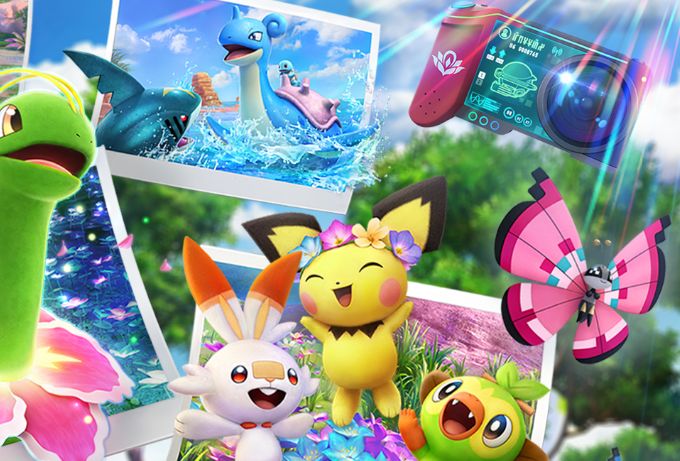
New Pokémon Snap: Worth the Wait

Here's The New Pokémon Snap Box Art | Cultured Vultures
FUN FACT: Although Grookey and Scorbunny both appear on the game’s front cover artwork, their fellow Galarian starter, Sobble, is relegated to the back cover. Poor Sobble.

Sequels that come many years after the original can vary wildly in quality, and this was something in the back of my mind when New Pokémon Snap was announced to be getting released at the end of April. Having played the game and exhausted the opportunities, I can safely say that any concerns I had were put to rest.

Thankfully, this sequel didn’t feel the need to reinvent the wheel; you’re still a young photographer tasked by a professor to go and take pictures of wild Pokémon in your machine that sticks to set paths. Along the way, you unlock items that you can throw to/at Pokémon to see how they react. At its core, this game is as faithful to the original as it could possibly be, and that works in its favour.

It would be a crime to talk about this game without mentioning how gorgeous it is. In just about every aspect, New Pokémon Snap blows Sword and Shield’s mediocre graphics out of the water. Textures are crisp, the locations are stunning and the Pokémon are so lively. There’s so many random interactions I’d never expect to see, like Scorbunny sleeping on Torterra or Torchic and Hippowdon befriending each other at a desert oasis. Every Pokémon oozes personality in this game, which makes taking pictures of them even more fun.

Where this game differs from its predecessor is the introduction of a slightly more involved story. Sure, the core is the same, but you make new friends and attempt to discover the mystery of the Illumina Pokémon as you travel around the Lental Region. The cutscenes that come with this story are stunning, and frankly the best a Pokémon game has ever looked.

New Pokémon Snap length explained: How long is New Pokémon Snap? •  Eurogamer.net

What I really like about New Pokémon Snap is that there’s so many secrets to be found, just like the original game. I was worried it’d be more handholdy, but it’s really not; there’s a scan function that helps draw your attention to a couple of things, but there are so many hidden paths and features that the scan only really provides slight hints for. You’ve got to figure things out on your own, and I love this. Pokémon games really should put more trust in their players because this game shows how well it can pay off.

An addition to the Snap formula that I really liked is that quests have been brought into the fold. Getting specific poses of Pokémon can yield rewards that allow you to add borders and effects to your pictures, so they’re not even remotely compulsory to completion. They also give you some slight hints on how to get the best pictures, which is cool.

One of my biggest complaints with the game comes from the points system. Unlike in the original game, in which Professor Oak simply gave you a score and you could strive to get the highest score, the sequel introduces not just a four-star system, but also bronze, silver, gold and platinum colours to accompany these. You don’t need the platinum colours to complete your PhotoDex, but you do need a photo for each star ranking. The catch? You can only have one photo for each species of Pokémon analysed per trip. This means you need to play through a minimum of four times to complete the PhotoDex, which in its more frustrating moments can feel like padding.

New Pokémon Snap Photodex / Pokédex - Pokémon Listing For All Monsters |  Real Raw News today

Although platinum stars aren’t necessary, in order to progress to new levels (or unlock alternate variants to the existing ones), you need to collect XP. In order to collect XP, you need to get the highest score on each photo as you possible can. It’s a nice incentive to get the best pictures, but the caps for some of the higher levels can be pretty tricky. Combine this with the one photo per species rule and it can sometimes become a bit frustrating.

My only other frustration comes from the Illumina Pokémon themselves. They effectively function as boss battles, which is a super cool idea, but as someone who likes to take photos of as many Pokémon as possible, the initial time you encounter their stage they are the only Pokémon in it. Which often means waiting a couple of minutes for them to appear so you can get a decent picture of them. It’s a small concern that only arises in a few stages, but definitely caused little bouts of boredom here and there.

All in all, as far as sequels go, New Pokémon Snap knocks it out of the park; it’s a bigger, better version of Pokémon Snap that adds a lot of replay value and of course looks much, much better than its 22-year-old, N64 predecessor. If there’s one thing I hope comes out of this, it’s that we start to see more creative spin-offs again, or at the very least returns to dormant spin-off series like Pokémon Ranger (which could also work very well for the Switch).

Pokémon Snap: A Picture-perfect Spin-off

Nintendo 64 Longplay: Pokémon Snap - YouTube
FUN FACT: Pokémon Snap wasn’t originally planned to be a Pokémon game, but something called Jack and the Beanstalk, much like the fairy tale.

Early Pokémon spin-offs were strange, they built on the concept of capturing every Pokémon in unique ways. Snap is one of the most fondly remembered spin-offs, and sees you capturing Pokémon not in Poké Balls, but with a camera. New Pokémon Snap has just been announced, so I figured it’d be nice to talk about the game that’s waited 21 years for a sequel.

In terms of gameplay, Snap is incredibly simple. It’s basically an on-rails shooter, only you use a camera instead of a gun in one of Nintendo’s signature spins on an established genre. You’re trying to get the best pictures of the wild Pokémon as possible, in order to do Professor Oak’s work for him (no changes there then). What’s most surprising about this simple gameplay is just how good it feels.

The main USP of Snap at the time it was released was seeing Pokémon in their natural environments, something that still has appeal to this day (hence the sequel). In addition to just watching them you can throw apples or Pester Balls at them to change how they’d react, or to prompt specific events, even evolutions in some cases. However, this did mean that cuts had to take place, as animating 151 Pokémon would have been incredibly time consuming. Consequently, this number was slashed to 63. Others like Ekans were planned in the beta, but unfortunately never made the cut.

The available Pokémon are divided into 6 areas, with a hidden seventh one housing Mew. With only a few Pokémon in each, the game isn’t that long, but honestly that doesn’t diminish any enjoyment at all. To this day it’s an incredibly fun time, seeing all the Pokémon going about their lives as you take pictures of them. There’s something oddly peaceful about it, except for when you’re trying to get a rare Pokémon to appear, or evolving one. Then it’s a bit more stressful.

Even though it was a Nintendo 64 game, I have to say that I really like how the game looks. Sure, it hasn’t aged the best, but it looks nice for what it is and the animations are so charming that you don’t find yourself focused on the individual polygons and textures. The game just oozes charm and charisma. You also have to give it props for bringing the 8-bit sprites from the Game Boy games to life in such an artful way.

I feel that this game was perfect for some kind of multiplayer action, like pitting two players against each other to see who could take pictures of more unique species. Heck, there’s even a points system in place, that could be easily translated to a multiplayer system. That could really add to the replayability, so it’d be nice to see them add something similar to the new entry, as unlikely as it may be. Even without this though, the game is still very replayable as is, I’ve gone back to it a few times myself.

In a way, Pokémon Snap feels like going on a safari drive in the Pokémon world, and it really succeeds at that. This game brings about a certain type of magic that a lot of other Pokémon spin-offs can’t quite reach, and I feel like that’s why it’s remained such a popular game over two decades after its release. Hopefully, New Pokémon Snap can do the original justice, and based on the release trailer that came out last week, I’m optimistic.