New Pokémon Snap: Worth the Wait

Here's The New Pokémon Snap Box Art | Cultured Vultures
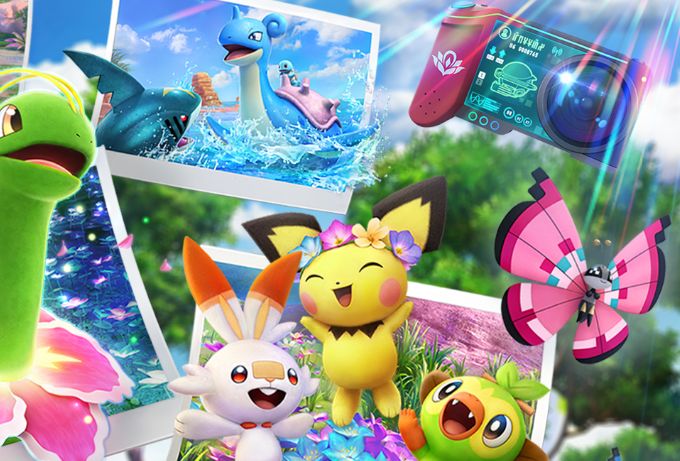
FUN FACT: Although Grookey and Scorbunny both appear on the game’s front cover artwork, their fellow Galarian starter, Sobble, is relegated to the back cover. Poor Sobble.

Sequels that come many years after the original can vary wildly in quality, and this was something in the back of my mind when New Pokémon Snap was announced to be getting released at the end of April. Having played the game and exhausted the opportunities, I can safely say that any concerns I had were put to rest.

Thankfully, this sequel didn’t feel the need to reinvent the wheel; you’re still a young photographer tasked by a professor to go and take pictures of wild Pokémon in your machine that sticks to set paths. Along the way, you unlock items that you can throw to/at Pokémon to see how they react. At its core, this game is as faithful to the original as it could possibly be, and that works in its favour.

It would be a crime to talk about this game without mentioning how gorgeous it is. In just about every aspect, New Pokémon Snap blows Sword and Shield’s mediocre graphics out of the water. Textures are crisp, the locations are stunning and the Pokémon are so lively. There’s so many random interactions I’d never expect to see, like Scorbunny sleeping on Torterra or Torchic and Hippowdon befriending each other at a desert oasis. Every Pokémon oozes personality in this game, which makes taking pictures of them even more fun.

Where this game differs from its predecessor is the introduction of a slightly more involved story. Sure, the core is the same, but you make new friends and attempt to discover the mystery of the Illumina Pokémon as you travel around the Lental Region. The cutscenes that come with this story are stunning, and frankly the best a Pokémon game has ever looked.

New Pokémon Snap length explained: How long is New Pokémon Snap? •  Eurogamer.net

What I really like about New Pokémon Snap is that there’s so many secrets to be found, just like the original game. I was worried it’d be more handholdy, but it’s really not; there’s a scan function that helps draw your attention to a couple of things, but there are so many hidden paths and features that the scan only really provides slight hints for. You’ve got to figure things out on your own, and I love this. Pokémon games really should put more trust in their players because this game shows how well it can pay off.

An addition to the Snap formula that I really liked is that quests have been brought into the fold. Getting specific poses of Pokémon can yield rewards that allow you to add borders and effects to your pictures, so they’re not even remotely compulsory to completion. They also give you some slight hints on how to get the best pictures, which is cool.

One of my biggest complaints with the game comes from the points system. Unlike in the original game, in which Professor Oak simply gave you a score and you could strive to get the highest score, the sequel introduces not just a four-star system, but also bronze, silver, gold and platinum colours to accompany these. You don’t need the platinum colours to complete your PhotoDex, but you do need a photo for each star ranking. The catch? You can only have one photo for each species of Pokémon analysed per trip. This means you need to play through a minimum of four times to complete the PhotoDex, which in its more frustrating moments can feel like padding.

New Pokémon Snap Photodex / Pokédex - Pokémon Listing For All Monsters |  Real Raw News today

Although platinum stars aren’t necessary, in order to progress to new levels (or unlock alternate variants to the existing ones), you need to collect XP. In order to collect XP, you need to get the highest score on each photo as you possible can. It’s a nice incentive to get the best pictures, but the caps for some of the higher levels can be pretty tricky. Combine this with the one photo per species rule and it can sometimes become a bit frustrating.

My only other frustration comes from the Illumina Pokémon themselves. They effectively function as boss battles, which is a super cool idea, but as someone who likes to take photos of as many Pokémon as possible, the initial time you encounter their stage they are the only Pokémon in it. Which often means waiting a couple of minutes for them to appear so you can get a decent picture of them. It’s a small concern that only arises in a few stages, but definitely caused little bouts of boredom here and there.

All in all, as far as sequels go, New Pokémon Snap knocks it out of the park; it’s a bigger, better version of Pokémon Snap that adds a lot of replay value and of course looks much, much better than its 22-year-old, N64 predecessor. If there’s one thing I hope comes out of this, it’s that we start to see more creative spin-offs again, or at the very least returns to dormant spin-off series like Pokémon Ranger (which could also work very well for the Switch).

Spyro: The Preignited Trilogy

Image result for spyro electrolls
TRIVIA: The Electrolls from Spyro 2 were voiced by Tom Kenny, who gave them the same voice SponeBob would later become famous with.

I’m sure everyone who’s ever played a game before has memories of that one game they played when they were really young, and that sense of awe and wonder was at its strongest. For me, that’s the PS1 Spyro trilogy (or rather, 2 and 3 because I never owned one until 2017). The second one is the first game I have memories of beating, and it’s amazing how the triumph I felt then came back when I replayed the series not too long before their fantastic remasters were released.

There’s something about the level design in Spyro that sets it apart from a lot of platformers, especially its main competitors at the time; Super Mario 64, Banjo-Kazooie, Sonic Adventure, and of course its main rival, Crash Bandicoot. Whereas these games often opted for linear level design or huge sprawling worlds with lots of collectibles, Spyro sits comfortably in between; there’s a linear path to the end that can usually be reached in only a couple of minutes, but there’s also lots to collect to the sides that gives completionists a lot to do.

Something else that sets Spyro games – particularly the first – apart from its competitors is the whimsical, dreamy landscapes the purple dragon explores on his adventures. Normally I wouldn’t notice stuff like this, but the pastel skies and architecture really give it an atmosphere unlike many other platformers. It says a lot when the games still have that whimsical impression two decades after their release. Whilst the visuals play a huge part in the atmosphere, something that should not be ignored is the music. The Police’s Stewart Copeland brings the levels to life with the rock-inspired themes we hear on our journey. There’s something inherently Spyro about all the tracks, a style so distinct that also perfectly captures the feeling of every level.

Image result for spyro alchemist
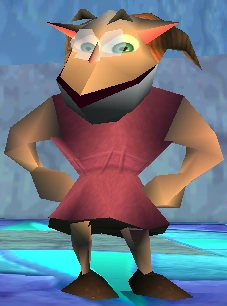
This man here is the real villain of Spyro 2, I’ll accept no other arguments.

Whilst I love praise this trilogy at any opportunity, it’s not without its flaws. Some of the sidequests and challenges are aggressively difficult, with certain ones in particular drawing a special kind of aggression from the fandom. Escort missions are barely ever people’s favourite part of games, but The Alchemist mission in Spyro 2 really takes the cake. What could have been a 10 second walk in a straight line becomes a minute-long gauntlet, complete with twists, turns and even fake outs to trip players up. Whilst it’s a lot less annoying going back to it, as a kid this was one challenge I just couldn’t do. Throw in the fact you had to do it twice if you never got the Head Bash before beating it, and that really throws salt in the wounds. The weird kind-of-tank battle in the third game is another low point as well in an otherwise fantastic game.

Image result for spyro 3 cover
Spyro and most of the playable characters from the third game. Poor Sheila.

There’s a lot of charm in Spyro’s world, from being able to burn plants to the more tongue-in-cheek moments like being mooned by Gnorcs. It’s a wacky world full of crazy characters, and Insomniac just revel in the insanity. As dreadful as he is, I’ve always liked Moneybags because he gets some great dialogue options if you refuse to pay him (some of which were cut in Reignited because they were… risque, to say the least). Spyro 3 also introducted a bunch of new characters, and this time you could play as them. Sheila (who’s not included on the PAL cover for some reason) could jump really high, Sgt Byrd could fly with his jetpack and drop bombs, and Bentley could whack metal chests and reflect projectiles. More drastic changes came with Agent 9, who saw a number of shooter types of gameplay, from third-person to on rails to DOOM-esque, with Sparx having a top-down shooter style. Agent 9 is interesting because his third-persons segments almost feel like an early attempt at Ratchet & Clank, Insomniac’s next big franchise. Admittedly, Agent 9’s gameplay isn’t half as good as that, and the other alternate characters all have their own problems, but they’re a nice change of pace usually. Except yeti boxing, that’s fun for nobody.

Whilst a lot of games from the PS1 era tend to age like a pint of milk that’s been left in the sun for a week, I think Spyro manages to avoid this trend, being a game that can still be enjoyed very much today. Insomniac Games truly did a brilliant job of making something vibrant, unique and a true joy to play, even in spite of some infuriating moments. This trilogy will always have a special place in my heart, not only for including the first game I ever beat, but for its undeniable charm and quirkiness that many games can’t come close to. I’d go as far as to argue that it’s a must-play for anyone who’s not given it a go yet, and that refers to either the original or Reignited, which is due to come out on the Switch in early September.